


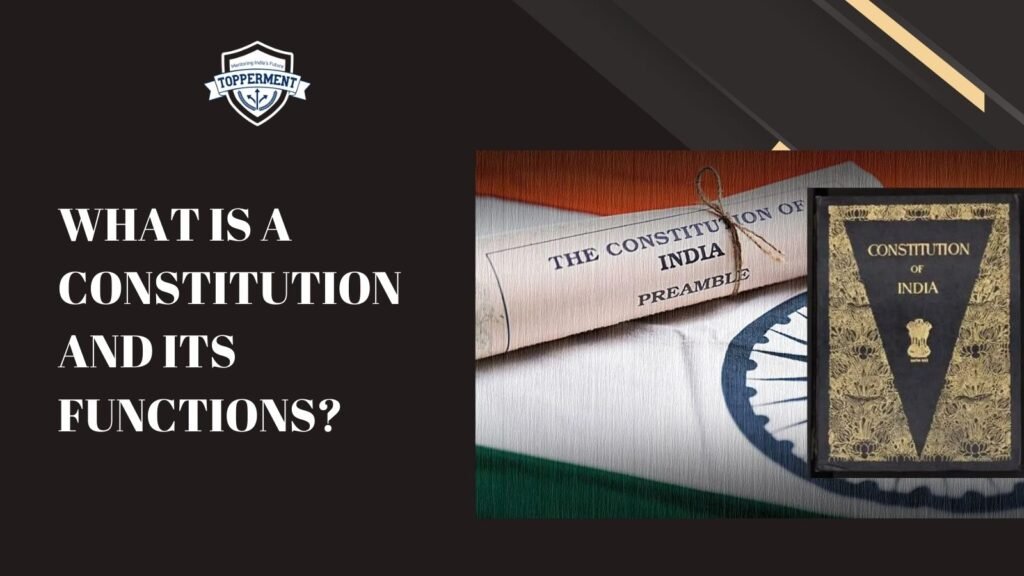
A constitution is defined as a body of rules that are established to regulate the system of government within a state. Let’s get into the details now.
The constitution defines and determines the relations between the different institutions and components of the government like the executive, judiciary, legislative, central, and state governments. There are different types of constitutions that have different functions.
Different types of constitution
1)Written and Unwritten constitution: There is no country in this world in which the constitution is entirely written or entirely unwritten. An unwritten constitution is a type of constitution that is not contained in one single document. They are partially written and partly oral.
2)Flexible and Rigid Constitution: A flexible constitution is easily changed without a procedure. This constitution is decided with a simple majority of vote of the members of the parliament. A rigid constitution is different, it has a long amendment procedure.
3)Unitary and Federal Constitution: Unitary constitution provides governmental powers to only the central government and doesn’t share the powers with other bodies in the country. While the federal system is an association of free states and the power is shared between the locals and state. The federal constitution provides a separate structure of government at the national, state, and local councils.
4)Democratic constitution: Democracy constitution is made up of the representatives of the people and it is installed by the people. It allows the people to choose their leaders by way of election and reject leaders who are doing no good to society.
5)Republican and Monarchical constitution: Republic constitution is a type of constitution that provides power to the elected head who is usually known as the President. While the Monarchical constitution is led by the King, Queen, and Emperor.
6)Presidential and Parliamentary constitution: A presidential constitution is something where all executive powers are in the hands of a president. The president will execute all the powers of the government directly or through the vice president. A parliamentary constitution is where all the powers of the government are in the hands of the Prime minister
Functions of Constitution
The major functions of the constitution are as follows:
1. The constitution provides a set of basic rules that allows for minimum coordination amongst the members of the society
2. Constitution lays out the fundamental principles according to which a state is governed.
3. Constitution has the power to make decisions in society and decides how the government will be constituted.
4. Constitution enables the government and fulfills the aspirations of the society and implements the ideas of justice, equality, liberty, and fraternity.
5. Constitutions created fundamental rights and the government has no power to trespass them.Indian constitution follows the parliamentary form of government and it should be followed even in the states.
Our constitution may have borrowed some features but the founders made sure that they borrowed some good features from different nations.
Also Read
- What is an earthquake and its causes? | UPSC Geography
- What is an Ecosystem And Its Significance? | UPSC Environment
Follow Us For More Content On:
https://www.instagram.com/topperment/