


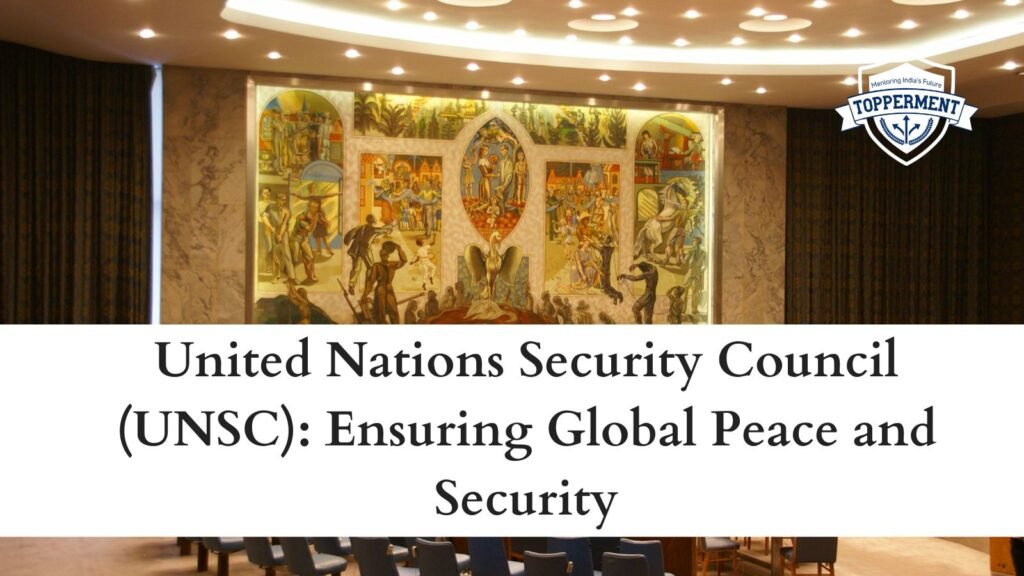
The United Nations Security Council (UNSC) is a vital organ of the United Nations (UN) responsible for maintaining international peace and security. It is composed of 15 member countries, including five permanent members with veto power and ten non-permanent members elected for two-year terms.
Composition and Structure:
- Permanent Members: The five permanent members of the UNSC are China, France, Russia, the United Kingdom, and the United States.
- Non-Permanent Members: Ten non-permanent members are elected by the General Assembly for a two-year term, representing various regions of the world.
- President: The presidency of the Council rotates among its members on a monthly basis.
Responsibilities and Functions:
- Peace and Security: The primary mandate of the UNSC is to maintain international peace and security by addressing conflicts and preventing aggression.
- Resolutions and Sanctions: The Council has the authority to adopt resolutions binding on all UN member states. It can impose sanctions or authorize the use of force to enforce its decisions.
- Peacekeeping Operations: The UNSC authorizes and oversees peacekeeping missions to regions affected by conflicts, deploying troops and resources to stabilize and rebuild.
- Dispute Resolution: The Council plays a crucial role in mediating and resolving international disputes, aiming to prevent conflicts from escalating.
- Non-Proliferation: It works towards preventing the spread of nuclear weapons and promoting disarmament through resolutions and monitoring mechanisms.
Veto Power and Decision-making:
- Veto Power: The permanent members have the power of veto, which allows them to block any substantive resolution, even if it has the support of all other Council members.
- Decision-making: Important decisions require the affirmative votes of at least nine members, including the concurring votes of all five permanent members.
Critiques and Challenges:
- Power Imbalance: The veto power of permanent members has been criticized for creating an imbalance of power and hindering effective decision-making.
- Representation: Some argue that the current composition of the Council does not adequately represent the geopolitical realities of the 21st century and the aspirations of many countries.
- Reform: Calls for reforming the UNSC to include more countries, enhance transparency, and limit the use of veto power have been ongoing, but progress has been slow.
The United Nations Security Council plays a crucial role in maintaining global peace and security. Through its resolutions, peacekeeping operations, and dispute resolution mechanisms, the UNSC strives to prevent conflicts and protect the lives of people worldwide
Also Read
- What Were The Urban Centers In Gupta Period? | UPSC History
- What Is Water Vapor And Its Significance? | UPSC Geography
Follow Us For More Content On:
https://www.instagram.com/topperment/