


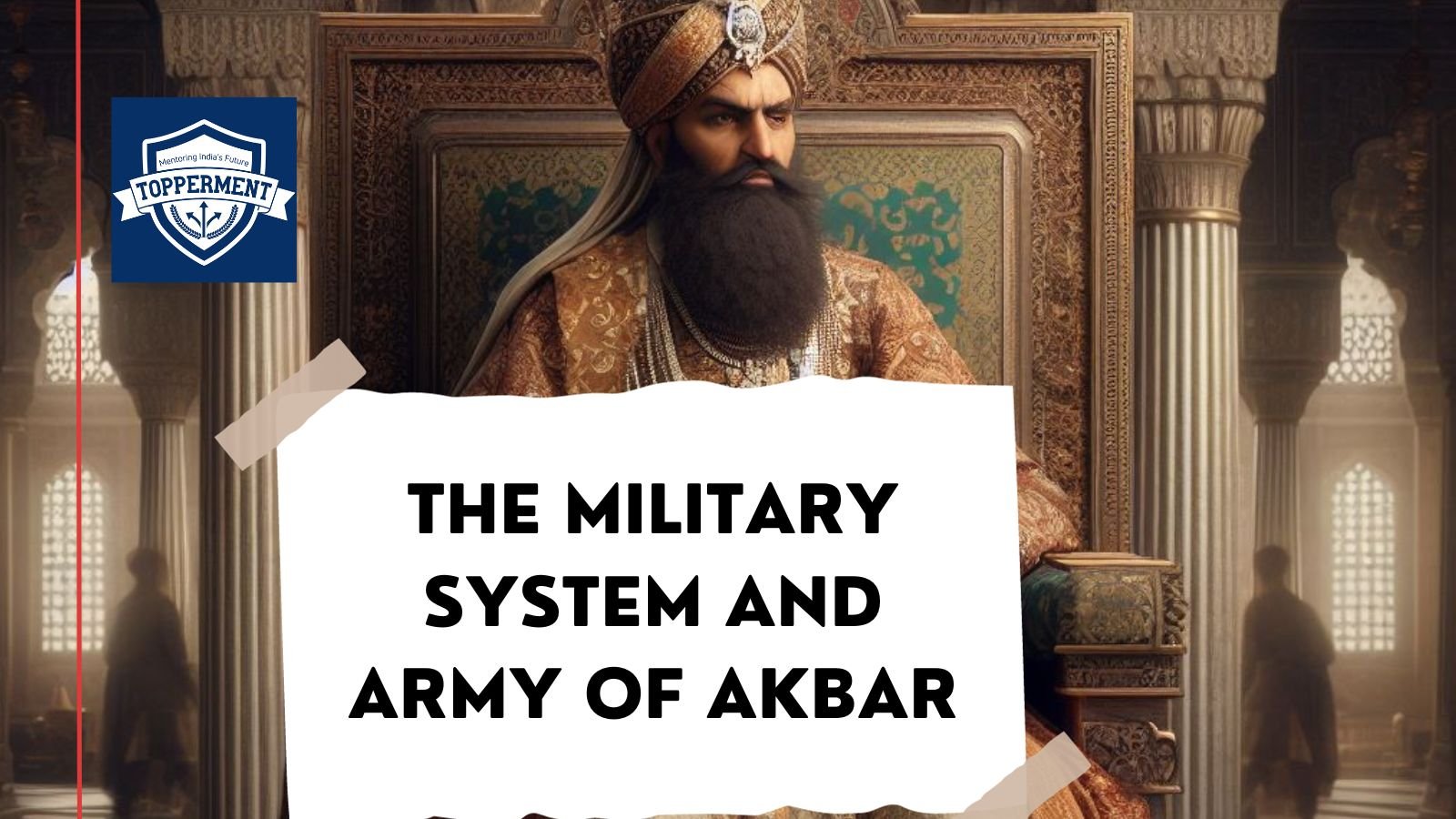
The reign of Emperor Akbar, often referred to as Akbar the Great, witnessed the establishment of a formidable military system and a powerful army. Akbar’s military reforms revolutionized warfare in the Mughal Empire and played a crucial role in consolidating his empire’s strength and expanding its territories
Organizational Structure of the Army:
Under Akbar’s reign, the Mughal army was organized into several units, each with specific roles and responsibilities. The army was divided into the Central Forces (Mansabdari system) and the Regional Forces (Sarkari system). The Central Forces consisted of nobles and mansabdars, who held ranks and were appointed based on their military capabilities. The Regional Forces, on the other hand, comprised local troops under the command of the Mansabdars.
Military Reforms and Strategies:
Akbar implemented significant military reforms to enhance the efficiency and effectiveness of his army. One of his notable reforms was the introduction of the Mansabdari system, which ensured a strong central command structure and efficient administration. The system ranked officials based on their military ranks (mansabs) and granted them land grants (jagirs) in return for their service.
Akbar also emphasized the use of artillery and firearms in warfare, enabling the Mughal army to overcome formidable fortifications and enemies. Additionally, he adopted innovative tactics, such as using a mix of infantry, cavalry, and artillery units, to achieve strategic advantages on the battlefield. Akbar’s military strategies, combined with his diplomatic skills, allowed him to forge alliances, expand the empire, and maintain peace in his territories.
Composition of the Army:
The Mughal army under Akbar comprised a diverse array of soldiers from different backgrounds and regions. It consisted of infantry, cavalry, artillery units, and even elephants. The infantry formed the backbone of the army, armed with swords, shields, and matchlock muskets. The cavalry, known as the Sowar, played a crucial role in swift attacks and reconnaissance. The artillery units were equipped with cannons and other firearms, providing long-range support and firepower
The military system and army of Akbar were instrumental in establishing the Mughal Empire as a dominant force in medieval India. Akbar’s military reforms, strategic brilliance, and emphasis on technological advancements transformed the Mughal army into a formidable fighting force
Also Read
- The Enigmatic Legacy Of The Pallavas | UPSC History
- History and Heritage Of The Pandyas | UPSC History
Follow Us For More Content On:
https://www.instagram.com/topperment/
Tag:Akbar, Cavalry, Composition Of the Army, Elephants, History, IFS, India, IPS, IRS, Military Reforms, Military System, Soldiers, UPSC